Timber Development UK Chief Executive David Hopkins has joined a new Forest Governance, Markets and Climate (FGMC) campaign exploring why strong forest governance matters for forests, communities, trade and investment around the world.
Forests are one of our greatest assets in tackling climate change. They sustain livelihoods and national economies, protect biodiversity, supply essential materials and help regulate our climate.
But ensuring forests can continue to deliver these benefits depends on more than commitments to protect them. It also depends on the systems, institutions and rules that determine how forests are managed and how their benefits are shared.
This is the focus of a new campaign from the Forest Governance, Markets and Climate (FGMC) Programme, Defining Forest Governance: What happens in forests doesn’t stay in forests.
Bringing together perspectives from government, civil society and businesses, the campaign explores what forest governance means in practice – and why decisions made in forest countries have consequences for economies and supply chains around the world.
What does forest governance mean?
Put simply, forest governance encompasses the legal, regulatory and institutional frameworks that determine how forests and forest resources are used and managed.
As David Hopkins describes, effective governance provides the foundations that allow forests to be used sustainably while giving businesses and investors the confidence to operate.
“Forest governance refers to all of the legal, regulatory and business frameworks surrounding forests in order that they can be managed sustainably, responsibly and legally.”
Strong governance can provide clarity over rights and responsibilities, improve transparency and create a more predictable environment for communities, governments and responsible businesses.
It is also fundamental to turning international commitments on forests into action. Governments, businesses and financial institutions have made significant commitments to protect forests and mobilise investment. But as David highlights, finance alone cannot deliver change if the systems needed to direct it effectively are not in place.
“There are huge commitments from governments, financial institutions, business and the general public for money to flow into forests. But without that governance in place, that money cannot reach the places where it is needed the most.”
Why this matters to the UK
Forest governance can sometimes seem distant from businesses and consumers in the UK. In reality, the connection is a direct one.
The UK is a net importer of forest products and, despite efforts to increase domestic woodland cover and productive forestry, will continue to rely on timber and other forest commodities sourced internationally.
At the same time, global demand for forest products is expected to increase, placing greater importance on maintaining healthy, productive and sustainably managed forests.
For the UK timber sector, good governance in producer countries is therefore not simply an environmental concern. It is fundamental to the resilience and continuity of the supply chain on which our construction, manufacturing, furniture and design sectors depend.
As David explains:
“We need those forests around the world to be governed well. Not just to secure our own supplies, but to make sure that we have a strong, sustainable supply well into the future.”
For businesses, strong forest governance also supports the transparency needed to demonstrate that products placed on the UK market are legal, responsible and sustainably sourced.
This relationship works both ways. Consumer markets such as the UK can support better outcomes in producer countries by maintaining demand for responsibly sourced timber and encouraging transparency and good practice throughout international supply chains.
From commitments to action
For more than a decade, FGMC has worked with governments, communities, civil society and businesses to strengthen forest governance in tropical forest countries, while connecting this work with international markets, trade and investment.
TDUK is contributing to these wider efforts through its current FGMC programme, working with partners across six African producer countries to strengthen connections between sustainable tropical timber producers and international markets.
For the timber sector, the underlying principle is straightforward: thriving forests and thriving forest economies need to go hand in hand.
Responsible trade can create value from sustainably managed forests, while good governance provides the foundations needed for businesses to invest, communities to benefit and forests to remain productive for generations to come.
As David puts it:
“We have a duty of care to all of those places that we buy from in order that we can continue buying from them in the future, making sure that those sources are always open and always available for the UK market.”
Watch the full interview on YouTube →
In his full interview with FGMC, TDUK Chief Executive David Hopkins discusses why forest governance matters to the UK, the role of responsible trade and investment, and why sustainable forest management is fundamental to the future security of timber trade.
Explore the full Defining Forest Governance campaign →
David’s interview forms part of FGMC’s Defining Forest Governance: What happens in forests doesn’t stay in forests campaign, bringing together perspectives from government, civil society and businesses.
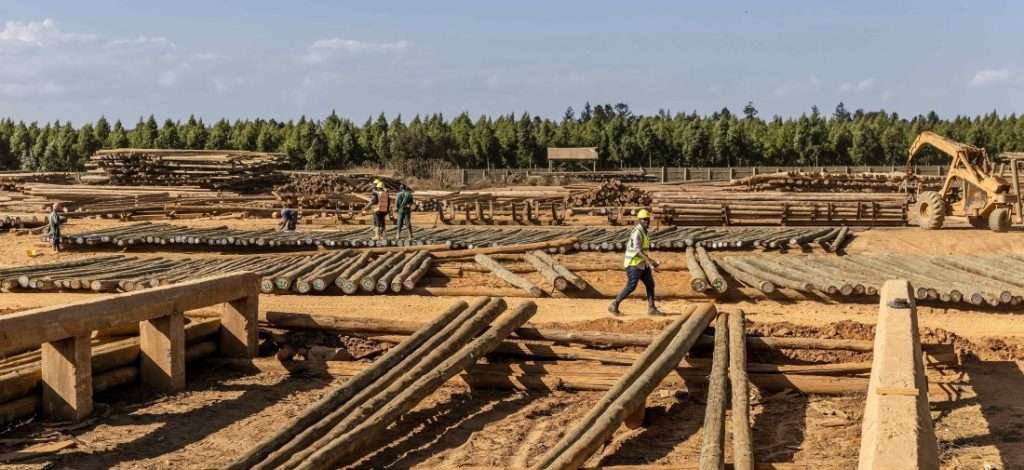
Photograph credit: Forest Governance, Markets and Climate Programme (FGMC) – Morne van der Linde, 2023