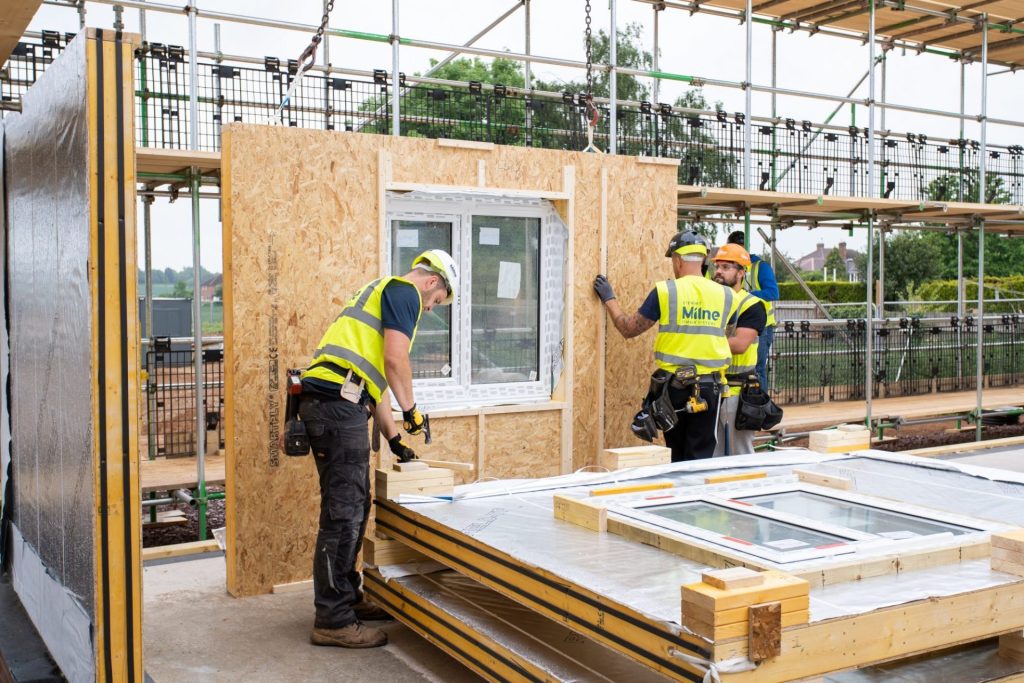
David Hopkins, Chief Executive of Timber Development UK, reflects on the progress we’ve made in the last 20 months since our launch – and on our exciting future helping to transform the built environment.
In the 20 months since we launched Timber Development UK (TDUK) there has been a whirlwind of progress and activities. A lot has changed – both within our organisation, and in the wider timber and construction market. But the fundamental reasons that we started on this journey remain the same.
We officially launched TDUK in September 2022 through the merger of the Timber Trade Federation (TTF) and TRADA (the Timber Research and Development Association) – two of the oldest, most well-established trade associations in the sector.
We brought product experts including sawmillers, importers, manufacturers and merchants, together with design experts including architects, engineers and contractors, to form a powerful engine for change – far greater than the sum of its parts.
Joining these two organisations together created an end-to-end timber sector organisation – from sawmill to specifier – which is rapidly improving dialogue and understanding right along the supply chain and making timber specification easier.
Right now, TDUK is amplifying your voice in the industry, building interdisciplinary communities of practice and mobilising huge numbers of professionals – including major developers and housing associations – to transform the way we build in the UK.
The impact of these efforts can be seen clearly in the Timber in Construction Roadmap, published jointly by government and industry in December 2023, where for the first time we have seen joint-government support for increasing the use of timber.
Our members are leading the way in a sea change towards embracing low-carbon, high performing timber products and systems.
Our missions
From the outset TDUK has had three clear objectives:
- Connect the Supply Chain by bringing together the largest timber supply chain bodies in the UK, we can improve understanding and ease specification
- Lead Best Practice by publishing the largest, most comprehensive online library of technical specification and design guidance for all members
- Accelerate a Low-Carbon Future by creating the tools, training and guidance to support the journey to net-zero.
These objectives still form the core of our mission – and we are making good progress against each one.
Connecting the supply chain
We’ve been rapidly growing since the merger and have more than 20,000 registered professional users from over 5,000 organisations in the construction space. The number of users signing up is growing and accelerating month on month.
Leading best practice
We have published more than 200 new technical resources to our website, covering a huge range of topics from wood anatomy to responsible sourcing to technical design guidance; including our new case studies and Timber Knowledge Sheets.
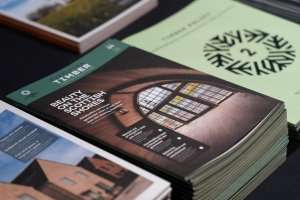 One of the key benefits of the merger is that it has allowed us to be free to collaborate and publish works with partners from all over the world, rather than being limited to one supplier, as was the case in the old incarnation of TRADA.
This has meant we can draw on expertise such as that from Swedish Wood for our three-volume engineering manual series Design of Timber Structures, and from Edinburgh Napier University for our Timber Knowledge Sheets.
This is in addition to our regularly published case studies of cutting-edge buildings, accompanied by monthly webinars from the design teams involved, as well as our regular policy, regulatory and market briefings.
Together with our running of the Wood Awards – the UK’s best showcase of timber design and inspiration – we are creating a real centre of excellence online, plus a strong community of practice among our membership network.
We also publish regular guidance for merchants and manufacturers on how best to comply with the latest regulatory changes, plus monthly ‘Timber Topics’ advice on the types of timber products that are most relevant to that part of the calendar, and how merchants can best upsell and maximise the opportunities timber products bring to grow their business.
The need for low-carbon building
We have put carbon at the heart of almost all our work at TDUK since day one. One of our first big projects was developing a Net Zero Roadmap for the timber supply chain – leading a coalition of 13 organisations to gather data on the true emissions profile of the sector and a set of actions to reduce them.
Since then, we’ve published a database of EPDs and embodied carbon data covering roughly 95% of the timber products used in construction. This gives designers all the data they need from the outset of their journey – making specifying timber simpler.
We’ve also included carbon data in nearly every case study and webinar we publish on the TDUK website – helping bring to life the carbon story inherent in every building created using timber.
What comes next
But our transformation is nowhere near done. We have an exciting list of publications coming out over the next few months, beginning with a new Timber Frame Design Guide – which will become a keystone document for designing timber buildings.
We’re also doing a lot of work to bring our members together to capitalise on the many eyes being attracted to our platforms, with Find Your Timber Partner – our new member directory – offering a one-stop shop for clients, customers and members alike to connect with the very best of the timber supply chain.
This is still only the beginning. As an organisation, we are determined to ensure every single one of our members has the knowledge, tools and support to build better with wood. Keep an eye out for further announcements next year.