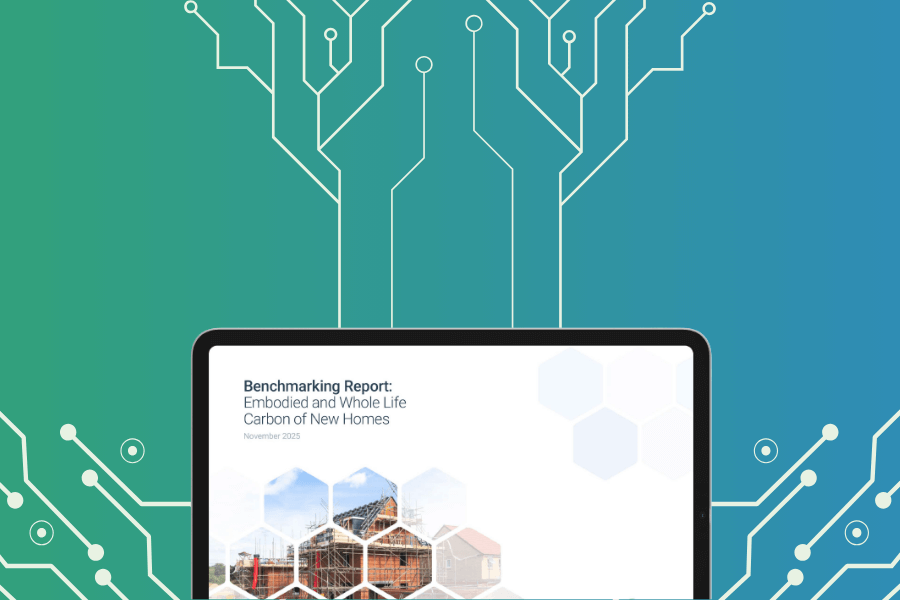
The Future Homes Hub has today published the UK’s first comprehensive Whole Life Carbon (WLC) Benchmarking Report for new low-rise homes.
Drawing on 48 detailed assessments from 17 homebuilders, the study establishes a robust, industry-wide baseline for embodied carbon, and highlights the construction choices that can accelerate progress to net zero. It is available for download now, from their website.
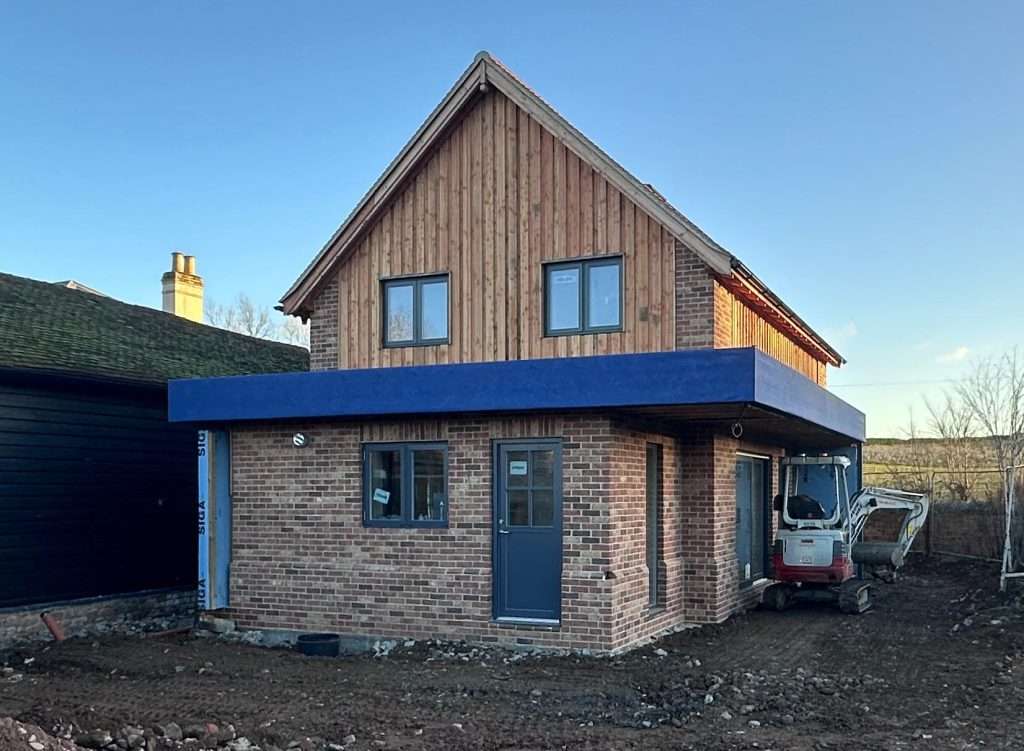
Timber frame construction stands out as a key decarbonisation solution, with the study showing that timber frame homes deliver lower average upfront and whole-life embodied carbon than masonry systems. This reinforces growing evidence that timber offers one of the most effective pathways to lower-carbon new housing.
The difference of 25 kgCO2e/m2 in upfront carbon or 41 kgCO2e/m2 in whole life embodied carbon is around 6-7% of the respective benchmark figures for the whole building, which broadly aligns with the Arup report for Defra, ‘Improving whole life carbon estimates for buildings constructed out of timber’.
Across the full dataset, the study reports average upfront embodied carbon of 406 kgCO₂e/m² and whole-life embodied carbon of 611 kgCO₂e/m², covering building-level impacts.
“For the first time, we have a clear, data-driven picture of our collective starting point on whole life carbon. This isn’t just about numbers; it’s about providing the tools and transparency our industry needs to set ambitious targets, make smarter design choices, and track meaningful progress,” said Adam Graveley, Head of Technical and Innovation, Future Homes Hub.
The Hub has set out priority next steps, including improving data accuracy, expanding measurement to include infrastructure impacts, increasing use of product-specific EPDs, and supporting manufacturers to bring verified low-carbon materials — including timber solutions — to market at scale.
The forthcoming Embodied Carbon Implementation Board will bring industry and government together to lead this next phase of decarbonisation.