One of the most important aspects of building with timber is properly planning for how to deal with moisture. Poor management, whether it is leaving timber exposed on site, or otherwise failing to account for moisture during the design process, can result in future damage – and expensive remediation.
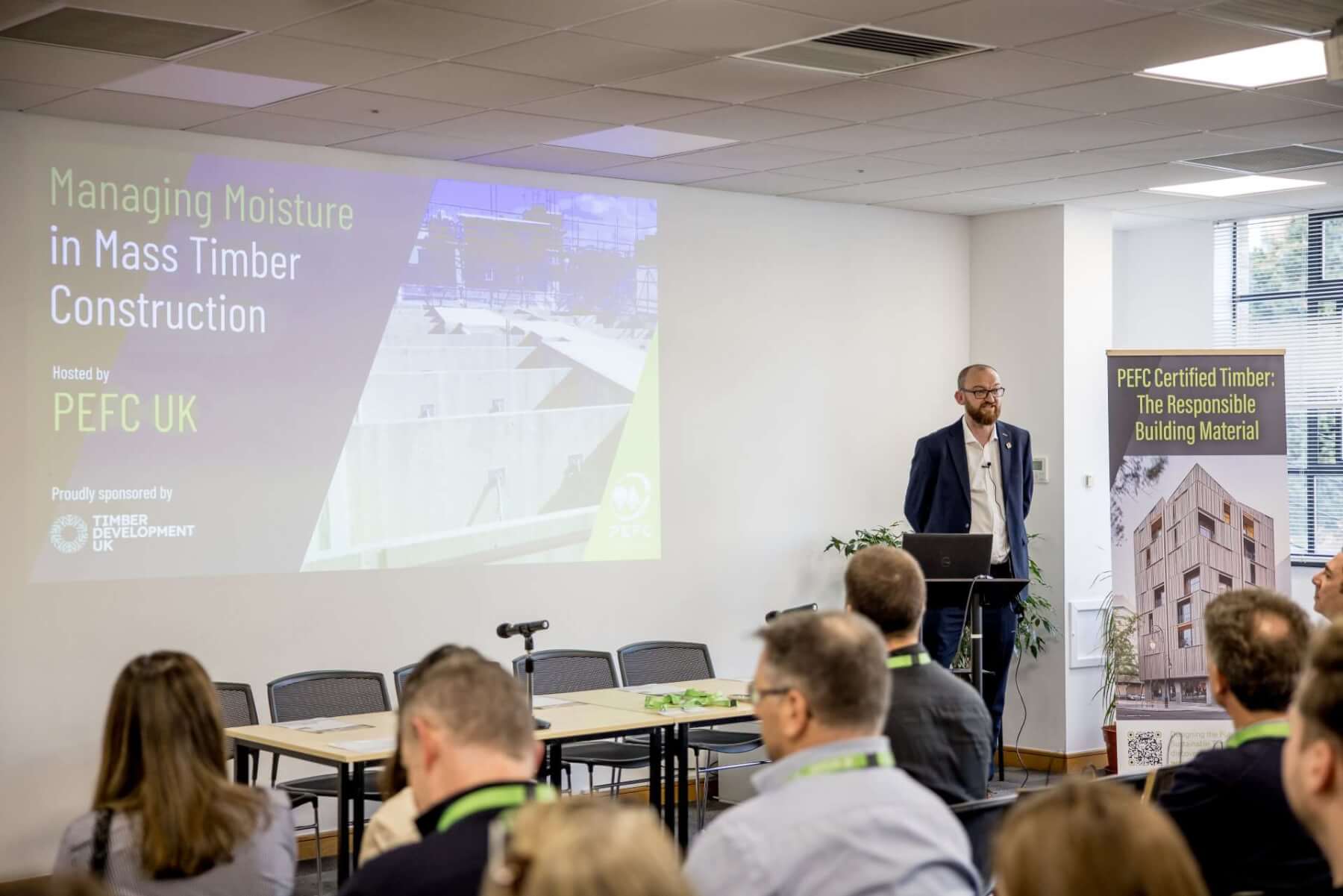
To help architects, engineers, contractors, consultants, developers and other built environment professionals get on top of moisture in timber construction, PEFC UK brought leading experts together to tackle key topics – including prevention, issues and outcomes, and remediation – with a special session in November 2024.
 Following on from the event, PEFC UK have now made the recordings of the speakers free for all to experience, and in partnership with Timber Development UK, is sharing them with the entire industry.
“Right across the UK, we are seeing a rise in the use of engineered timbers, like Cross-Laminated Timber (CLT), with climate-conscious developers and tier one contractors incorporating PEFC certified materials into their procurement strategies to help them reach their net zero goals,” said John Kirkby, PEFC UK executive director.
“It has been fantastic to see so many organisations recognising the strength of PEFC certification in supporting forest growth, responsible sourcing, and providing a pathway to build lower carbon with natural, sustainable materials. Growth of this industry can have a really positive impact, strengthening the connection between our built environment and forests.
“Of course, engineered timbers like CLT – as with any timber product – requires careful management of moisture to prevent potential issues. By sharing crucial knowledge around site practices and design detailing, we are aiming to help support a higher-performing, lower-carbon built environment using timber.
“Fortunately, the steps you need to take to protect timber are generally very simple. We are very grateful to the amazing set of speakers who were happy to join us to impart their knowledge during this free event – and we are pleased to now be able to share the their talks – for all to benefit from – via our partners Timber Development UK.”
Find below links to three sessions from the day, along with brief summaries of their contents and key lessons:
How to Prevent Moisture Issues in Mass Timber Construction
Dr Paul Newman, technical director of the Structural Timber Association.
Paul’s session focuses on preventing moisture issues in structural timber construction. Key points included the importance of implementing durability risk assessments from the project’s inception, using alternative materials in high-risk areas, and ongoing moisture monitoring to catch issues early.
This included practical advice on how to avoid water traps, use temporary protection membranes, and ensuring proper ventilation. Paul highlighted the need for a moisture management plan, competent on-site personnel to prevent moisture-related issues and ensure sustainable, durable building practices.
Issues with Excess Moisture in Mass Timber Construction – Causes and Outcomes
Phil O’Leary, Director of Filros Timber Consultancy
Phil O’Leary discussed the issues of excess moisture in timber construction, emphasizing the importance of understanding moisture sources, such as construction moisture and leaks, and their impact on timber decay.
He explains that excess moisture can be mitigated through drainage, ventilation, and evaporation, and how water can cause significant decay in CLT panels, especially when it’s hidden and goes unnoticed for extended periods.
The discussion underscored the challenges of identifying and repairing water damage in mass timber structures, which can be costly and time-consuming.
Remediating Moisture Related Defects in Mass Timber Construction
Martin Milner, Managing Director of Milner Associates, and Structural Timber Association Technical Consultant
Martin Milner from Milner Associates, part of the RSK group, discussed the challenges and solutions for repairing and remediating timber buildings. He emphasized the confusion in industry terminology, particularly with “mass timber,” and highlighted the importance of understanding the root causes of issues like condensation.
Milner outlined a five-step repair process: safety assessment, defect removal, assessment of repair options, action to repair, and follow-up trades. He stressed the need for proper design, material selection, and consideration of structural requirements. Milner also addressed the importance of quality control, storage, and logistics to prevent moisture-related problems and ensure sustainable repairs.
Learn more about PEFC UK from their website, and make sure to connect with them on their social media channels including LinkedIn and Instagram.
Want to find out more about moisture? Explore related resources on the Timber Development UK website on moisture and timber.