Stair safety is often overlooked, yet it is one of the most critical aspects of building design. Each year, thousands of accidents occur on both domestic and public staircases. In the UK, research from the British Woodworking Federation (BWF) shows that 43% of adults have experienced a stair-related accident in the past 12 months, with around 60% of these incidents happening at home. The most common causes include slippery steps, poor lighting and the absence of continuous handrails.
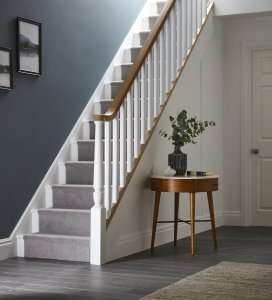 A staircase is more than just an architectural feature – while they can be an attractive design element, staircases are a vital safety element that must meet regulatory standards, provide stability and ensure accessibility for users of all ages and balustrades play a key role in this.
In domestic properties, building regulations require handrails to be positioned 900 mm above the pitch line on stairs and landings. In public or commercial environments, the recommended height increases to 900mm on stairs and 1,100mm on landings. Any drop greater than 600mm must be guarded and gaps in the balustrade must not allow a 100mm sphere to pass through. These rules prevent children from slipping through or becoming trapped. Horizontal rails or ladder-style designs should be avoided in family homes to reduce climbing hazards.
Richard Burbidge‘s balustrade systems are independently tested to ensure compliance with UK Building Regulations. Each component is engineered to withstand a 0.36kN horizontal load, ensuring the system is strong, durable and safe for everyday use. Using a complete system from a single manufacturer eliminates compatibility issues and guarantees a consistent level of safety and performance, giving both contractors and homeowners confidence in the finished staircase.
Handrails are equally important in preventing accidents. To be effective, they must run continuously along the stair flight, be positioned within easy reach and allow users to steady themselves quickly if they lose balance. Wall-mounted handrails are particularly useful in enclosed staircases and for residents with limited mobility. Timber handrails from Richard Burbidge offer a smooth, continuous surface that feels warm to the touch while providing stability and control.
Safety also depends on lighting and surface finishes. Even glare-free lighting helps users see tread edges clearly, while non-slip step surfaces reduce the risk of slipping. Contrasting nosings or finishes further improve visibility and accessibility, particularly for older users or those with impaired vision.
To support contractors and designers, Richard Burbidge offers a dedicated trade design service. This service provides tailored advice, design drawings and product recommendations for both domestic renovations and large-scale commercial projects, helping ensure every staircase is safe, compliant and visually cohesive.