The Biogenic Stored Carbon Quotient (BSCQ) is the UK’s first certification scheme for biogenic stored carbon in the built environment. Developed by Grown in Britain, it is a means of monitoring, reporting and verifying the long-term carbon stored in construction projects that use biogenic materials.
The BSCQ provides the construction sector with an independently verified way to measure the long-term carbon stored in a project – turning an invisible climate contribution into a reportable, commercially actionable asset.
The scheme has been developed in direct response to the UK Government’s Timber in Construction Roadmap and their Timber Industrial Strategy, in partnership with Timber Development UK, Bangor University, the Forestry Commission, Welsh Government, Scottish Forestry and industry leaders.
Locking away carbon
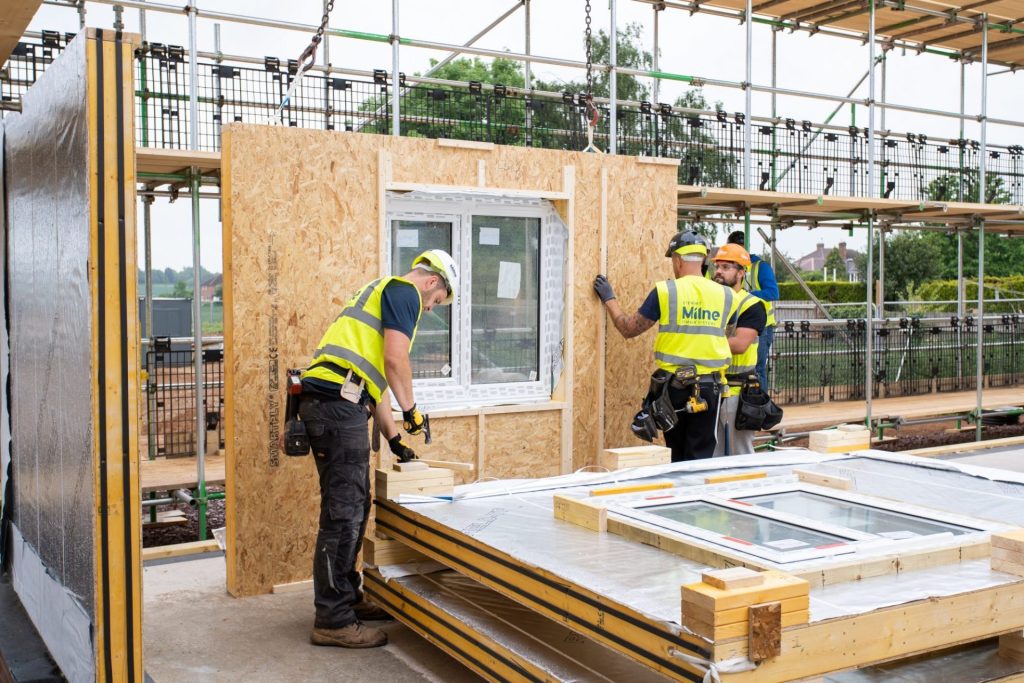
Plants and trees absorb CO₂ as they grow. When we build with them, that carbon remains locked out of the atmosphere for the lifetime of the building. So every project that specifies timber or other biogenic materials is already storing carbon. But that contribution is often invisible: absent from tenders, ESG reports, corporate accounts and conversations with shareholders and clients. The BSCQ changes that.
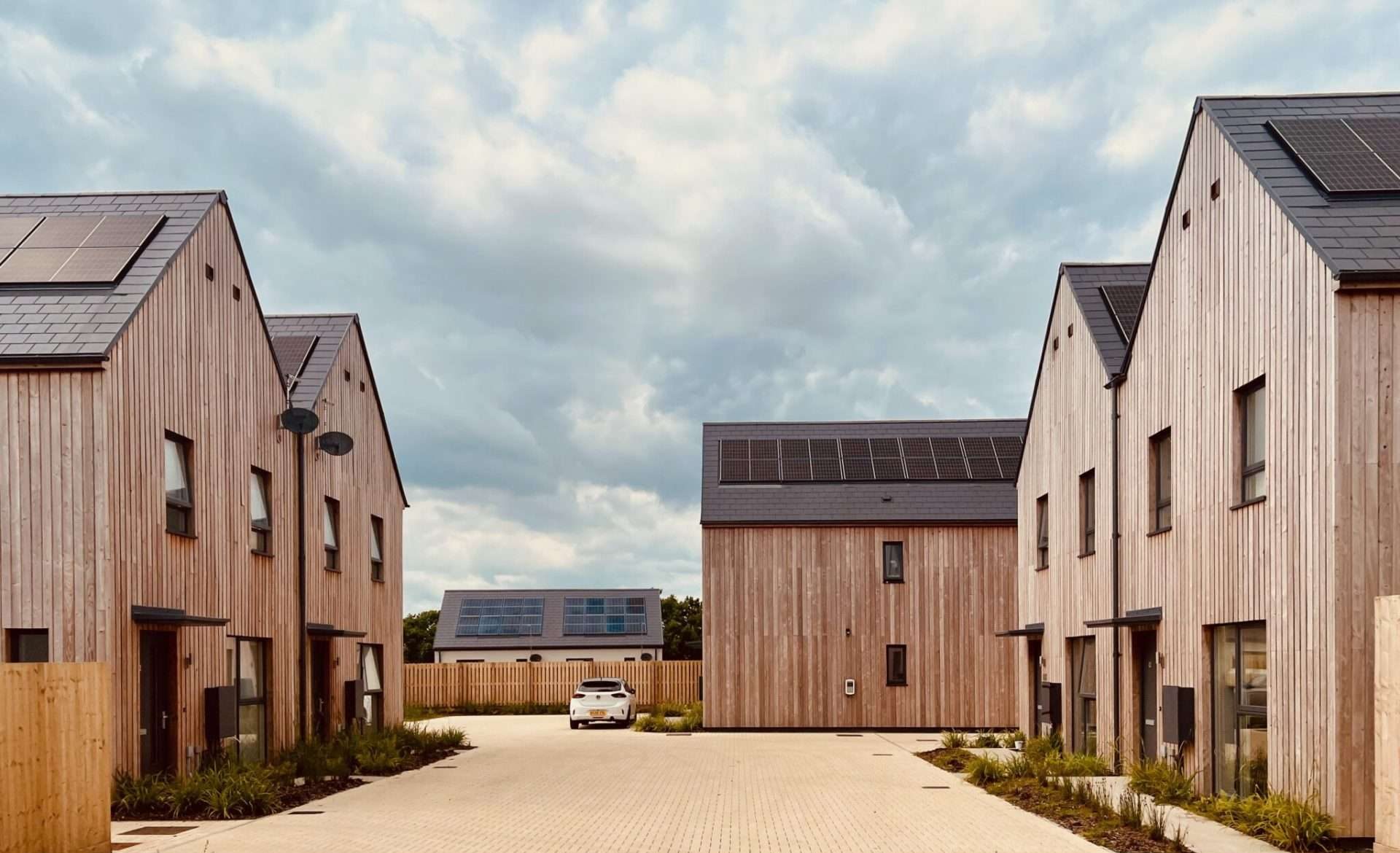
“This scheme will clearly demonstrate the positive environmental impact of projects like the Gwynfaen housing development. The biobased material choices not only provide healthy places for people to live but act as a long term carbon store for decades to come.”
– Justyna Wilkinson, Associate Architect at Stride Treglown
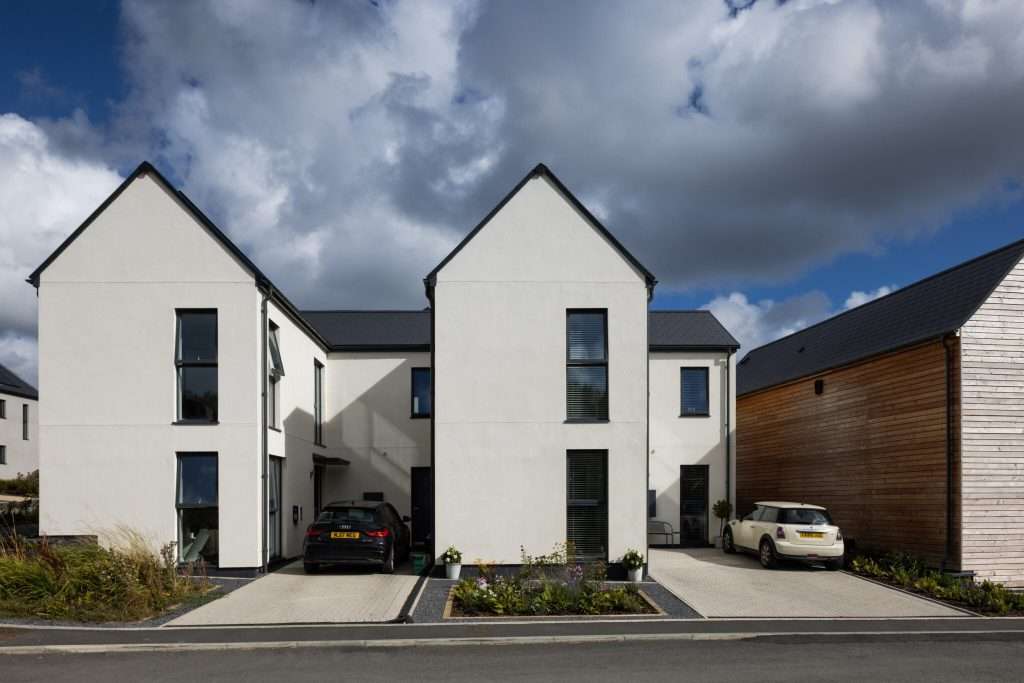
The Gwynfaen Housing Project, designed by Stride Treglown architects underwent BSCQ certification, and was found to have sequestered 3480635 kgCO2e
What BSCQ certification can provide
BSCQ gives construction projects with a certified, publicly registered record of the biogenic carbon stored in their buildings, covering all biogenic materials where sufficient data is available, including timber, sheep’s wool, straw and hemp. For developers, contractors and public bodies, BSCQ can deliver:
- An independently verified stored carbon figure from a third party that sits alongside embodied carbon data in project reporting and corporate accounts
- An auditable basis for ESG reporting credible verification that can be put in front of a board, an investor or a procurement panel with confidence
- Positioning for emerging carbon credit mechanisms. Certified stored carbon can be prepared for future monetisation on the voluntary carbon market
- A verified record that supports competitive tendering including requirements now appearing in Department for Education contractor frameworks.
Independent auditing and certification of BSCQ are carried out by Supply Chain Insites Ltd.
The Role of Grown in Britain (GiB) Certified Timber
Whilst both imported and homegrown timber are included in the scheme, each BSCQ-certified project must include an element of GiB-certified timber, reflecting the ambition of the UK and the devolved Government’s ambition, to increase the use of homegrown timber in construction.
GiB-certified timber has a demonstrably lower carbon footprint than imported equivalents, as evidenced by TDUK’s independently verified Environmental Product Declaration (EPD) data. Grown in Britain is the only certification scheme to verify the legality, sustainability and provenance of UK timber, and holds Category A status under the UK Government’s Timber Procurement Policy.
To read full details of the BSCQ scheme, including the standard and supporting documentation, click here.
“This certification scheme is a game-changer. It enables the construction sector to move beyond emissions reduction and embrace carbon storage as a strategic climate solution. Timber buildings are not just low-carbon — they store carbon in the long term. And now we can prove it.”
– Matthew Riddiford, Carbon Plantations