Green oak cladding has always been the traditional choice for rural properties and outbuildings but has now become increasingly popular for modern and contemporary buildings. Here, TDUK member WL West explores the benefits of oak timber and highlights its top 10 reasons for choosing fresh sawn oak cladding.
An iconic hardwood, Oak has been prized for thousands of years for its timeless beauty, strength and resistance to decay. Its honey brown colouring will weather to a soft silvery-grey when used externally and its attractive grain makes it a perennially popular choice.
European Oak is a dense, heavy timber, making it a durable and long-lasting choice for external cladding. It has a natural resistance to decay and insect attack and can also withstand harsh weather conditions. Maintenance is relatively low, requiring minimal cleaning and oiling.
As oak has a high tannin content, tannin may exude from the cladding boards during the first few months after installation, resulting in streaks and stains. Tannin will also react with and corrode any ferrous metal, so stainless steel fixings must be used.
Although oak is generally more expensive compared to softwoods like Western Red Cedar and Douglas Fir, its durability makes it a worthwhile investment. Fresh sawn oak cladding is usually a more cost-effective choice than air dried oak but, being wet, this type of oak cladding will shrink after installation. It is therefore important to read the supplier’s installation and fixings information.
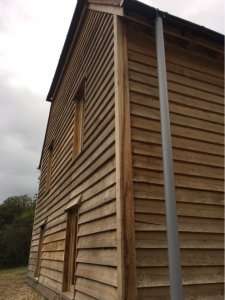 Oak cladding profiles
Oak cladding, such as that available from TDUK members including WL West, is available in a number of different dimensions and profiles to suit a wide range of projects.
Fresh sawn (green) oak is best suited to feather-edge, waney-edge and square-edge profiles. These have a more traditional, rustic appearance and are perfect for country homes and rural outbuildings.
Air-dried machined oak cladding profiles (such as shiplap or halflap) are often used vertically or horizontally to create a clean, more contemporary feel.
The benefits of green oak cladding
When considering cladding options, green oak stands out as a timeless and versatile choice. Known for its natural beauty and durability, it offers a unique combination of aesthetic appeal and practical benefits.
Whether you’re looking to enhance the character of a traditional property or add warmth to a modern design, green oak cladding provides an environmentally friendly and long-lasting solution. Importantly, it offers some key benefits that make it a popular option for both rural and contemporary builds.
Natural beauty and versatility
Over time, oak’s honey-brown colouring will weather to a soft silvery-grey and small splits and cracks may appear. This gradual, natural aging process results in the building developing a unique character and charm.
When used as cladding, it creates a timeless aesthetic that enhances the architectural features of any structure, blending effortlessly into rural landscapes or providing a strikingly organic contrast in urban settings.
Its adaptability makes green oak cladding an excellent choice for a wide range of projects, from traditional barns to modern extensions.
Sustainably sourced timber
Timber is renewable, recyclable and biodegradable, making it a more sustainable option than many other building materials such as brick, concrete and plastic.
When shopping for green oak cladding, it’s important to research the sustainability practices of your chosen supplier. Look for certifications like FSC or PEFC, which ensure the timber has been responsibly sourced from well-managed forests. Choosing a supplier with strong environmental commitments not only supports sustainable forestry but also guarantees a high-quality product that aligns with eco-conscious values.
All WL West Timber’s oak is sourced from legal, well-managed woodlands in France. WL West is committed to sourcing timber sustainably and has FSC and PEFC Chain of Custody certification. As a member of Timber Development UK, the company adheres to its Responsible Purchasing Policy.
Low-carbon footprint
WL West’s green oak cladding is sourced from France, making transport miles significantly lower compared to materials like Canadian Western Red Cedar. By choosing British or European timber, the carbon footprint associated with transportation is reduced, making it a more environmentally responsible choice for your project.
Furthermore, green oak cladding is used in its unseasoned state, which eliminates the need for energy-intensive kiln drying and further reduces energy consumption.
Compared to heavily processed cladding materials like uPVC, metal and tile, green oak timber cladding has a much lower embodied carbon, making it one of the most sustainable options available.
Excellent longevity
European oak is a dense and heavy timber, known for its strength and durability, making it an excellent choice for external cladding. It has a natural resistance to decay and insect attack and can withstand harsh weather conditions. The expected life for WL West’s green oak cladding, for example, is 30 to 60 years.
Low maintenance cladding
Green oak cladding is incredibly low-maintenance, requiring no chemical treatment either before or after installation. Unlike many other materials, it does not need to be painted, stained, or sealed, as its natural properties provide excellent resistance to decay and weathering.
Over time, the green oak weathers beautifully to a silvery-grey finish without any intervention, allowing it to develop a natural patina that adds to its charm.
Maintenance is limited to occasional cleaning to remove surface dirt or debris, ensuring it continues to look its best with minimal effort.
This low-maintenance quality makes green oak cladding an ideal choice for homeowners and project managers seeking a durable, hassle-free solution for exterior cladding.
Insulating and acoustic properties
Fresh sawn oak cladding is not only visually striking but also highly practical, offering excellent thermal insulation and acoustic properties. The installation of green oak cladding can help to regulate indoor temperatures, due to its natural density, keeping spaces cooler in summer and warmer in winter, which can reduce energy usage.
It also effectively absorbs external noise, mitigating the impact of noise pollution and creating a comfortable environment. This combination of beauty and functionality makes fresh sawn oak cladding a smart choice for any building project.
A cost-effective material
Although fresh sawn oak is generally more expensive than softwoods such as western red cedar or douglas fir, its durability makes it a worthwhile investment.
Compared to air or kiln-dried oak, green oak is usually a more affordable option, perfect for those seeking the beauty and strength of oak for their exterior timber cladding, without the premium price.
Breathable timber
As oak is a breathable and permeable material, it allows moisture to escape from the building. This helps to prevent issues like mould that can arise from trapped moisture in non-breathable materials, such as uPVC cladding.
For green oak cladding, this breathability is especially beneficial, as it ensures the timber remains stable while maintaining the health and integrity of the building’s structure over time. If you are looking for an attractive, sustainable, long-lasting and low-maintenance exterior cladding material, put green oak at the top of your list.
* This article was originally published in the Spring 2025 issue of Supplying Timber magazine.