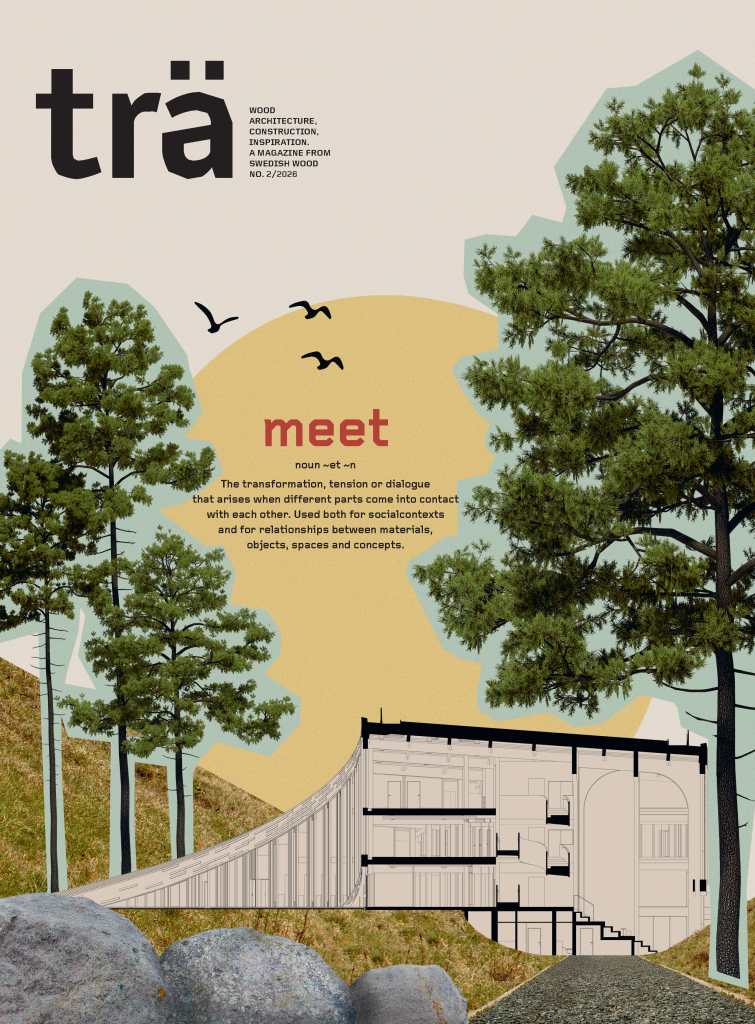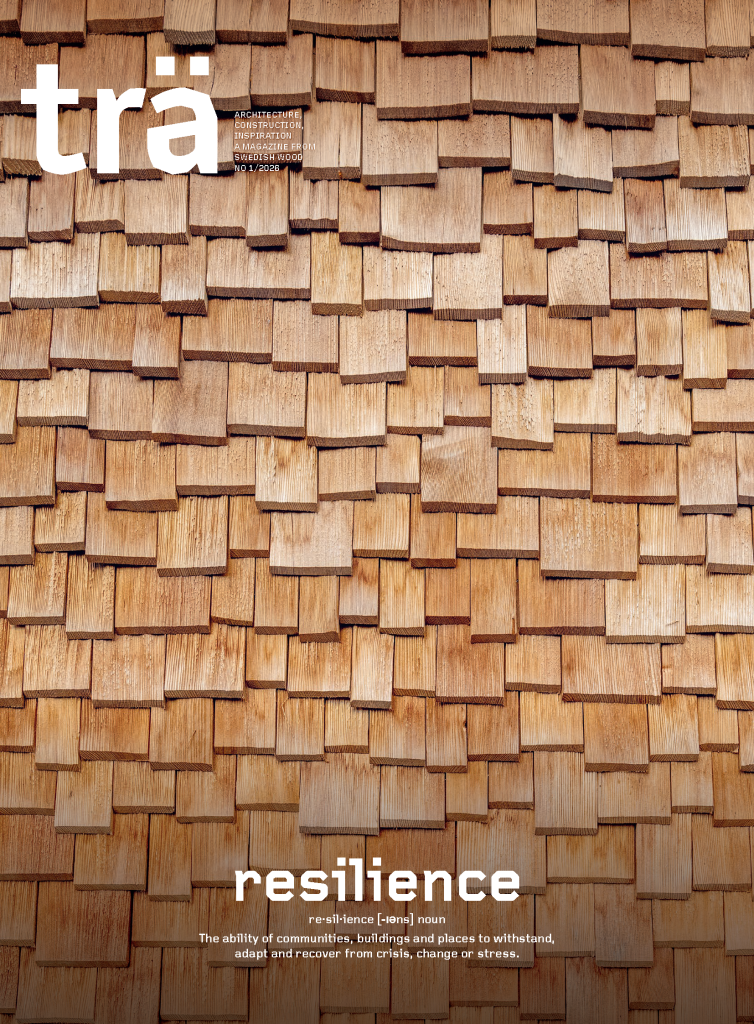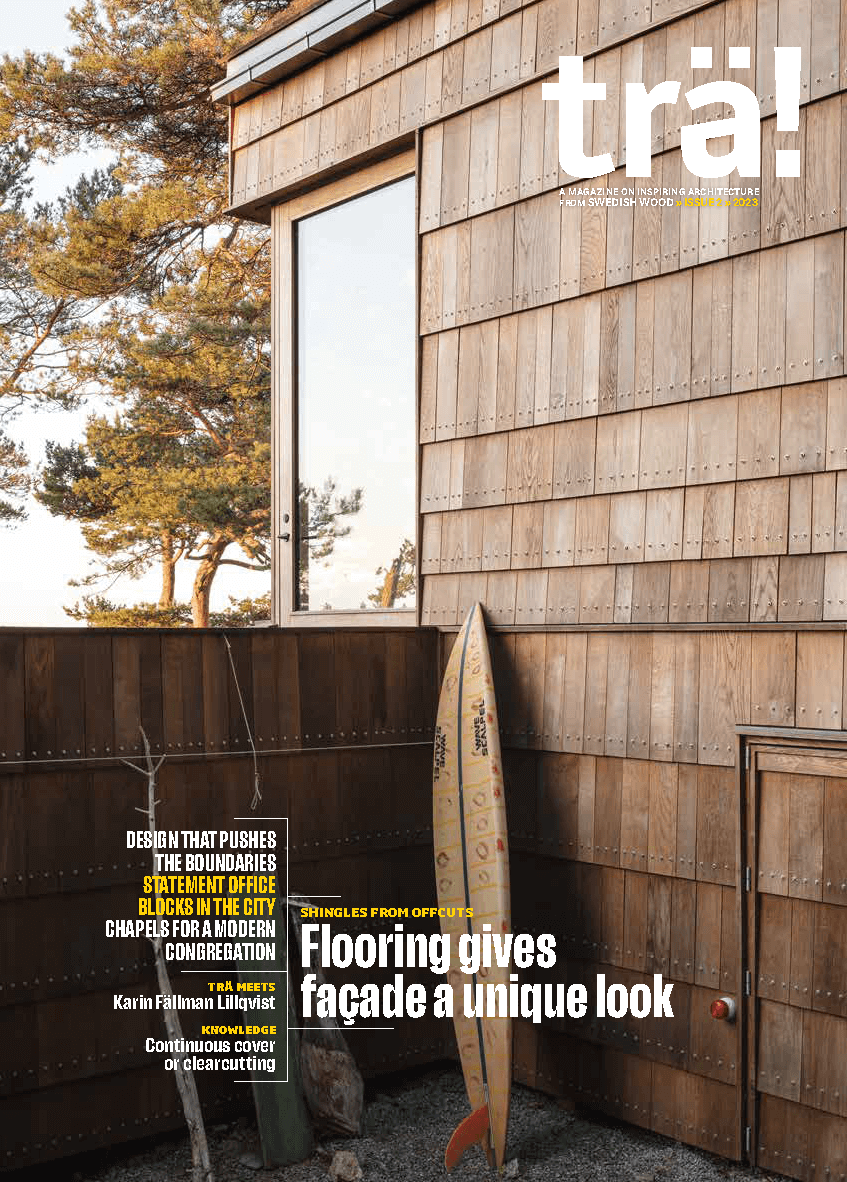
Trä! Issue 2 | 2023
Date Published
Document Type
Category
Theme
Author
Building a sustainable and inclusive future
In recent months, the Swedish Forest Industries Federation, of which Swedish Wood is part, has been discussing with our member companies what more we can do to help solve the challenges facing society. This work, dubbed the Future Journey, revolves around formulating promises for the future in the areas where we clearly bring benefits for society. The climate transition is one such area, as well as boosting biodiversity and ensuring that all of Sweden has the conditions to develop.
These promises will then guide our work over the coming years. One thing has become very clear in all this: our member companies have an incredibly strong
desire to contribute even more than they already do to the green transition. Making this journey together is therefore going to be incredibly stimulating!
In April, the industry got together at the Framtidsmötet conference, at which I was pleased to lead a debate on how the Swedish wood industry can help with the reconstruction of Ukraine. Earlier this year, EU President Ursula von der Leyen said that it was our moral duty to rebuild Ukraine, and that we should do so »in the spirit of the New European Bauhaus«. The New European Bauhaus is an initiative focused on building a sustainable and inclusive future that is
beautiful to the eye, the mind and the soul. Building with wood gets right to the heart of this and Sweden has a lot to contribute in terms of knowledge in the field of wood construction. Because although Ukraine is a relatively large producer of wood products, the country has no tradition of building in wood.
I hope I will be able to return to this topic in future issues. Earlier this spring, Södra opened its new CLT factory in Värö, with the capacity to supply
framing material for more than 4,000 homes each year. I believe in a bright future for wood construction, despite inflation and interest rate rises that have hit construction hard. We simply can’t afford to go any other way! We are running out of time to limit the impacts of climate change and reverse the trend – the climate crisis will not wait. The fastest way to reduce the climate footprint of construction is to choose wood as a material, not least because of its many
benefits. In addition to the low climate footprint of wood product manufacturing, built-in wood products also remain a carbon sink throughout the life of the building. This is a feature we need to make better use of to limit carbon emissions!
Contributors:
About the editor