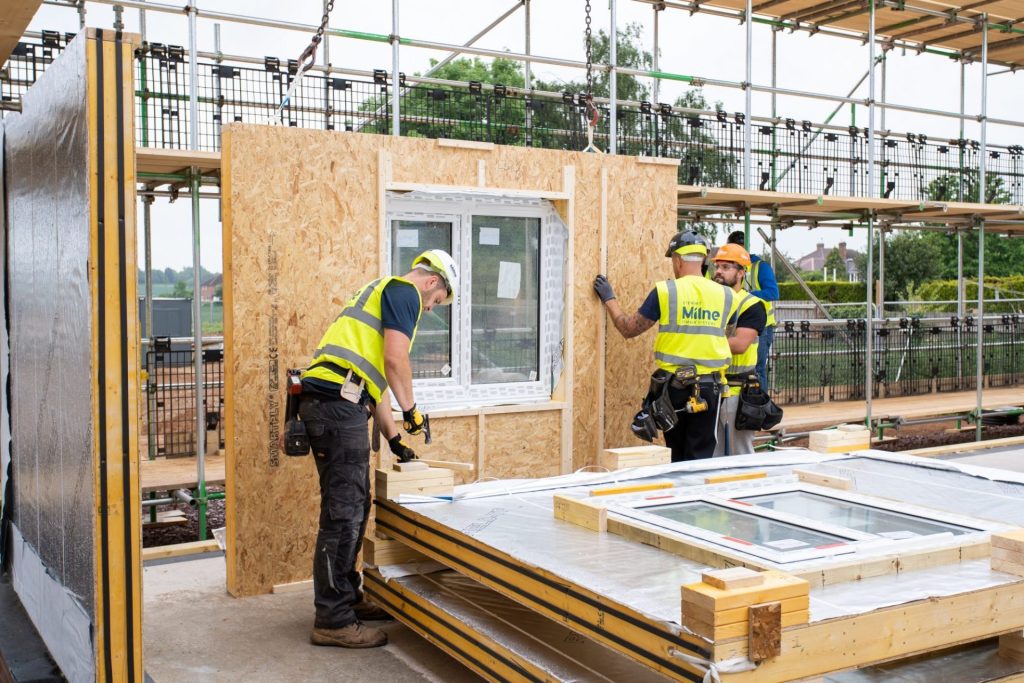
From a bespoke modular home and an innovative university centre to what is believed to be the largest UK-grown glulam structure ever built, this collection of buildings from the TDUK archives highlights the versatility and potential of homegrown timber in modern construction.
Across the UK, our forests and woodlands are a valuable national asset. When sustainably managed, they support biodiversity, enhance wellbeing, strengthen local economies, and provide a rich variety of materials. Hardwoods – such as oak, ash, sycamore, beech, chestnut, walnut and elm – and softwoods – including sitka spruce, Douglas fir and larch – offer exceptional potential across structural, interior and exterior applications.
Yet despite these natural advantages, the UK remains one of the least forested countries in Europe, with only 13% forest cover compared to the EU average of 37%. It is also the world’s second-largest net importer of timber products after China. UK-grown softwoods are increasingly used, although we do still need to improve specification of C16-graded timber. Our hardwood sector however is significantly underutilised, with only around 10% of harvested wood processed into sawn timber.
To unlock the full environmental and economic benefits of forestry, we must make better use of our domestic timber resources and support the planting and management of productive woodlands.
These case studies offer inspiration and practical insight. They demonstrate how UK-grown timber – across a spectrum of species, products and performance grades – can be used with confidence, beauty and innovation in a wide range of building types. From engineered timber and structural C16 to cladding, decking and fine joinery, these projects showcase not only what is possible today, but what could become standard practice in a more sustainable future.